If you’re already using AI tools for content, marketing, or operations, you’ve probably noticed something frustrating:
👉 AI is fast—but you’re still doing most of the work.
You generate content with AI, but still need to edit, organize, and publish it manually.
You use AI for research, but still have to interpret and execute.
You automate small steps—but not the full workflow.
So instead of saving time, you’re just working faster… not working less.
That’s because most people are still using tool-based AI, not agent-based AI.
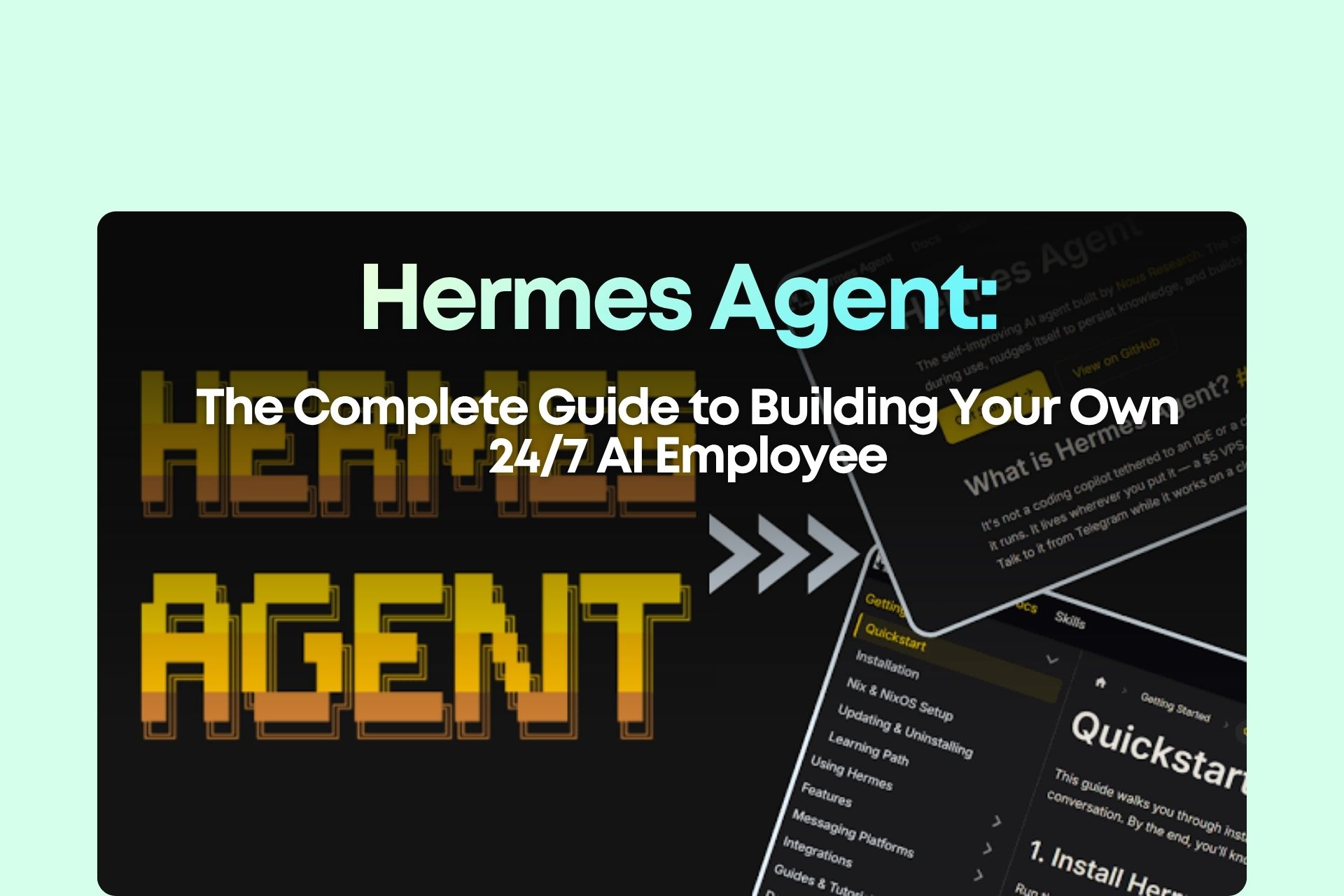
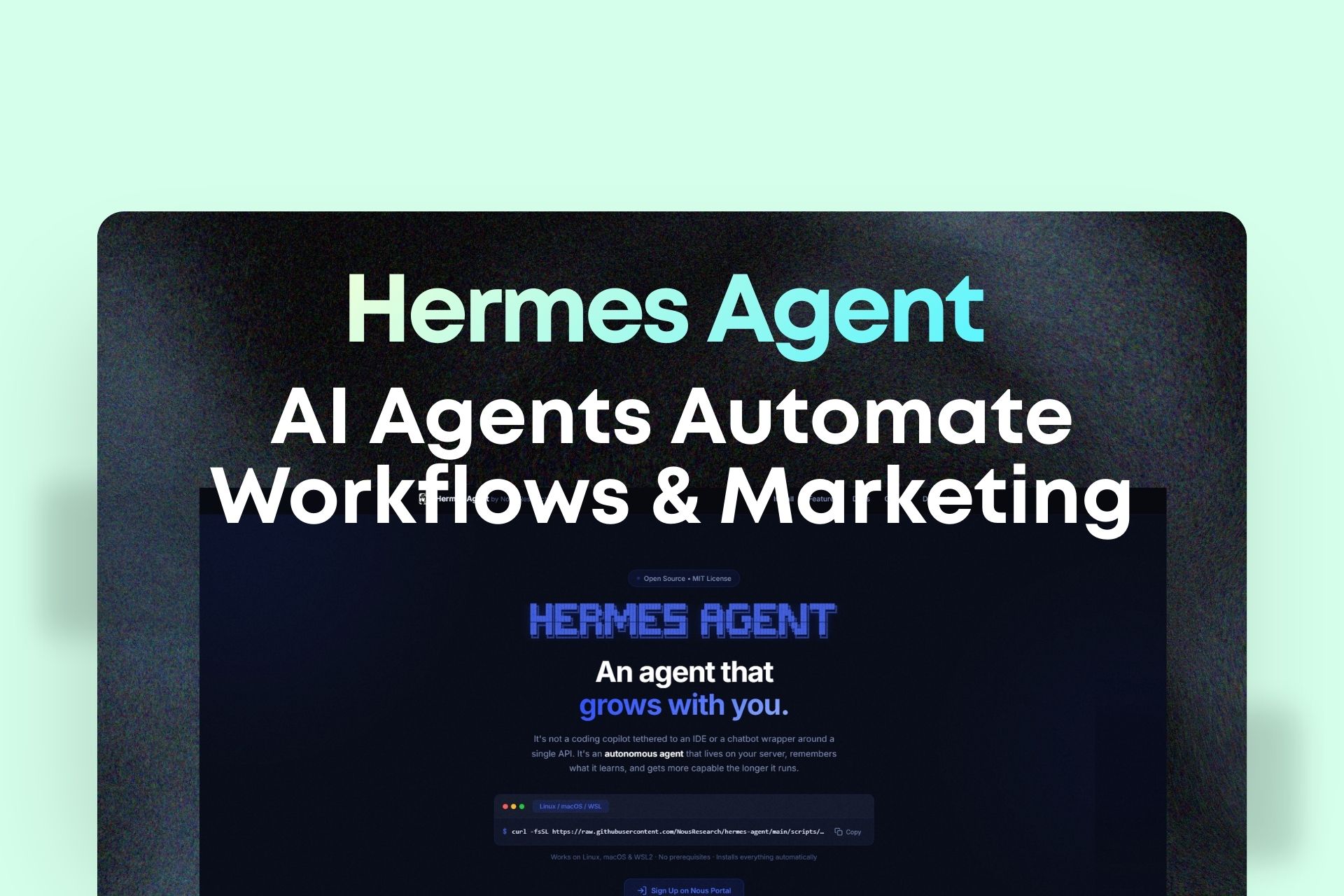
And that’s where Hermes Agent comes in.
Hermes Agent represents a major shift—from AI as a passive assistant to AI as an active operator that can:
- Run continuously
- Execute tasks using tools
- Remember context over time
- Improve workflows through experience
At NextMaven, we focus heavily on AI workflow design and automation systems. What Hermes Agent shows is clear:
👉 The future of AI isn’t prompting—it’s orchestration.
In this guide, you’ll learn:
- What Hermes Agent actually is
- How its architecture works
- What it can do in real-world workflows
- How to apply it to marketing and automation
What Is Hermes Agent? (Definition)
Hermes Agent is an open-source AI agent platform developed by Nous Research.
In simple terms:
👉 It’s an AI system that can complete tasks—not just respond to prompts.
Key Difference from Traditional AI
Traditional AIHermes AgentPrompt-responseTask-drivenNo long-term memoryPersistent memoryCannot actCan use toolsManual executionAutomated workflows
Think of it this way:
👉 ChatGPT = a smart assistant
👉 Hermes Agent = a digital operator that can do the work
How Hermes Agent Works (Architecture Explained)
Hermes isn’t just a model—it’s a full system built around an agent loop + tools + memory + execution layer.
🧠 1. Agent Runtime (Core Engine)
This is the “brain” of Hermes.
It handles:
- Understanding instructions
- Breaking tasks into steps
- Deciding which tools to use
- Managing execution flow
At its core is a loop:
- Receive task
- Call LLM
- Decide actions
- Execute tools
- Update state
- Repeat until complete
👉 This loop is what turns AI into an “agent”
🧠 2. Memory System (Short-Term + Long-Term)
Hermes includes layered memory:
Short-Term (Session Memory)
- Current conversation context
Long-Term (Persistent Memory)
- User preferences
- Brand voice
- Historical tasks
Stored locally (e.g., SQLite), this allows:
👉 Continuity across sessions
Instead of restarting every time, the AI evolves with use.
🧠 3. Skills System (Procedural Knowledge)
Skills are reusable workflows stored as structured knowledge.
Examples:
- SEO blog writing process
- Lead generation pipeline
- Content repurposing system
Key features:
- On-demand loading (efficient)
- Reusable across tasks
- Can be created/updated by the agent
👉 This is essentially AI learning how to do things better over time
🧠 4. Tools System (Execution Layer)
Hermes can directly interact with tools:
- Terminal (run commands)
- File system (read/write files)
- Browser (web interaction)
- APIs / MCP servers
This is critical:
👉 The AI doesn’t just think—it acts
🧠 5. Gateway (Automation Layer)
Hermes supports persistent operation via:
- Messaging platforms (Telegram, Discord)
- Scheduled jobs (cron)
- Multi-user interaction
👉 This turns the agent into a live system, not just a session-based tool
What Can Hermes Agent Do? (Capabilities)
Hermes Agent is designed for real-world execution—not just experimentation.
🧩 1. End-to-End Content Automation
A complete workflow can include:
- Topic research
- Keyword analysis
- Content generation
- Optimization
- Publishing
👉 The key is not just content creation—but full pipeline automation
🤖 2. AI-Powered Customer Interaction
Using the gateway:
- Respond to inquiries
- Capture leads
- Qualify prospects
- Follow up automatically
👉 Functions as a 24/7 AI sales + support assistant
⚙️ 3. Workflow Automation
Hermes can integrate with:
- CRMs
- Notion
- Email systems
- APIs
Unlike tools like Zapier:
👉 It doesn’t just move data—it processes and decides
🔍 4. Multi-Agent Delegation
Hermes supports sub-agents for parallel execution:
Example:
- Agent A → market research
- Agent B → competitor analysis
- Agent C → synthesis
Results are combined into one output.
👉 Faster execution + better task decomposition
💻 5. Code Execution (Advanced Automation)
With execute_code, Hermes can:
- Generate scripts
- Execute them
- Return processed results
Ideal for:
- Data processing
- Batch operations
- Complex pipelines
👉 Reduces token usage and increases efficiency
Comparison with Other AI Agent Frameworks
Hermes differs mainly in its packaging and usability.
ToolCore FocusHermes AgentFull-stack agent platformLangGraphStructured workflow controlAutoGenMulti-agent collaborationCrewAIRole-based task execution
Where Hermes Stands Out
- Built-in CLI + automation gateway
- Native memory + skills system
- Integrated tool execution
- Faster to deploy real workflows
Limitations
- Still early-stage (rapidly evolving)
- Requires some technical setup
- Limited native Windows support
How to Apply Hermes Agent (Practical Framework)
To get real value, focus on system design—not just experimentation.
Step 1: Start with a High-Value Task
Choose something repetitive:
- Content creation
- Customer replies
- Research workflows
👉 Repetition = highest ROI
Step 2: Define Clear Instructions
Avoid vague prompts:
❌ “Help me write content”
✅ “Generate 3 SEO blog posts daily targeting AI marketing keywords”
Step 3: Build Memory Context
Feed the agent:
- Brand tone
- Target audience
- Business goals
👉 This ensures consistency across outputs
Step 4: Limit Tool Access
Start simple:
- Enable: web, text
- Avoid: terminal (initially)
👉 Reduces risk and complexity
Step 5: Add Automation Layer
- Set scheduled tasks (cron)
- Connect messaging platforms
👉 This is where the system becomes truly autonomous
Conclusion
Hermes Agent represents a fundamental shift in how AI is used:
👉 From answering questions → to executing workflows
The real competitive advantage is no longer:
“Who uses AI”
But:
👉 Who builds AI systems
With its combination of:
- Persistent memory
- Reusable skills
- Tool execution
- Continuous operation
Hermes Agent moves AI closer to being a self-operating system for business workflows.
If you start using agent-based systems now, you’re not just improving efficiency—you’re building:
👉 A scalable, automated, AI-driven operating layer for your business