Are You Doing “Important Work” — or Just Managing Work?
You reply to Slack questions.
You compile weekly updates.
You move data between tools.
You write reports.
You chase approvals.
You might already be using AI — but you’re still busy.
That’s because most AI tools only help you complete tasks. They don’t take ownership of workflows.
In 2026, Notion introduced Custom Agents — autonomous AI teammates that monitor, decide, execute, and update work across Notion, Slack, email, calendars, Linear, Figma, and more.
This is not another writing assistant.
This is the shift from “AI helper” to “AI operator.”
At NextMaven, we focus on AI workflow automation and conversion optimization. One trend is clear:
The next competitive advantage isn’t whether you use AI — it’s how many workflows AI runs for you.
In this article, you’ll learn:
- What makes Custom Agents fundamentally different from typical AI tools
- 7 high-ROI real-world use cases (Marketing, Sales, Founder, HR, Product)
- A step-by-step framework to design your first Agent
- Cost control and risk management strategies
- How to turn AI into a scalable automation layer for your business
Let’s dive in.
What Are Notion Custom Agents?
Custom Agents are not chatbots.
They are AI teammates that:
- Have permissions
- Monitor triggers
- Connect to tools
- Execute actions autonomously
- Write back into systems
They can operate across:
- Notion databases
- Slack channels
- Email inboxes
- Calendars
- Linear
- Figma
- Custom MCP servers
Here’s the difference:
ChatGPT helps you draft an email.
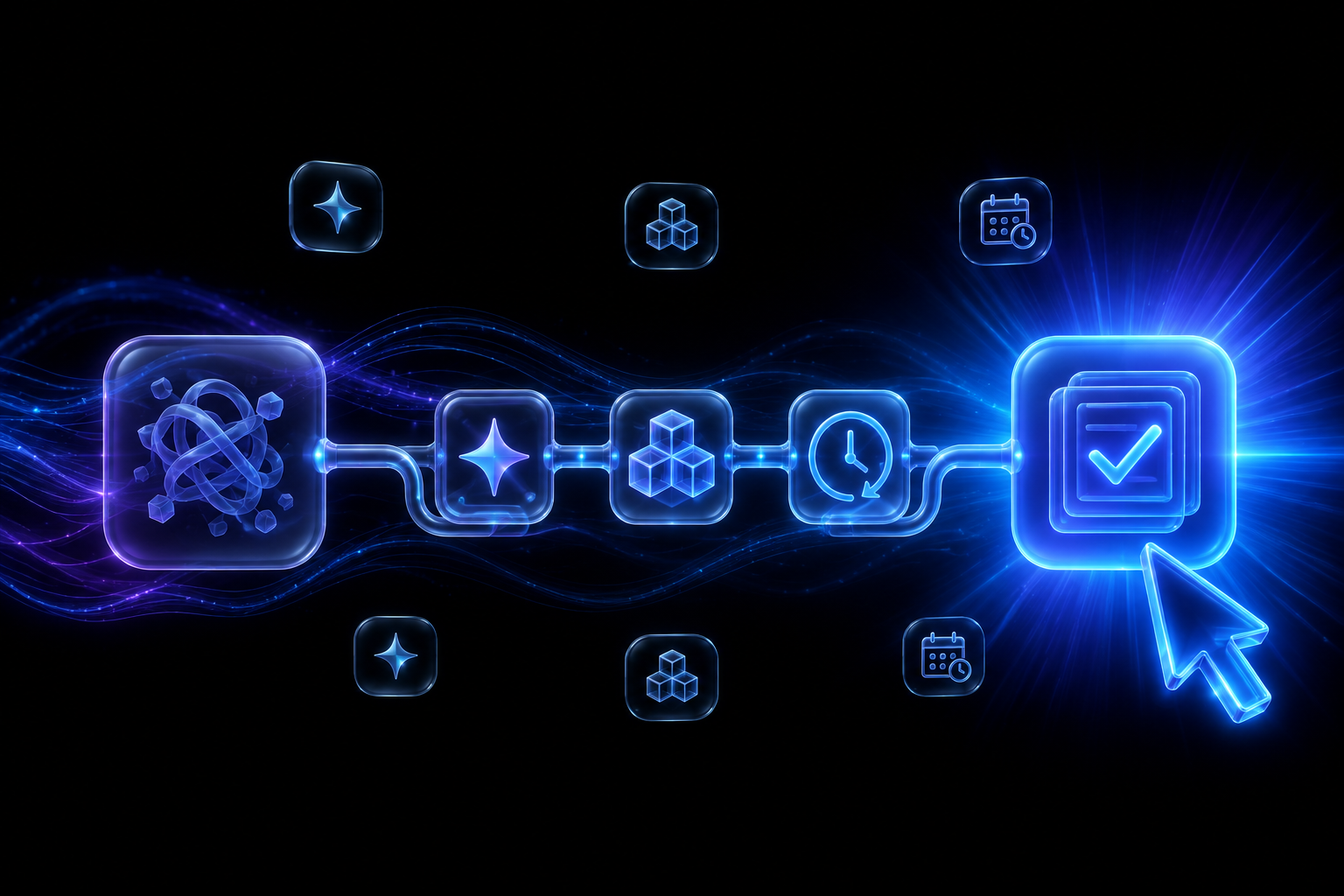
Custom Agents monitor your inbox → categorize emails → create tasks → assign owners → update reports.
That’s workflow automation.
Why Custom Agents Change AI Workflow Automation
Traditional automation tools (like Zapier) are rule-based:
If A → Then B.
Custom Agents are reasoning-based.
They can:
- Interpret context
- Analyze semi-structured data
- Decide next steps
- Generate outputs dynamically
- Adjust logic based on evolving inputs
This means workflows can now:
- Handle ambiguity
- Cross multiple tools
- Adapt instead of follow static rules
Pull Quote:
“Real automation doesn’t save five minutes — it eliminates entire workflows.”
7 High-ROI Custom Agent Use Cases
1️⃣ Marketing: AI Content Operations Manager
Pain Point:
Slow content production. Inconsistent SEO. Manual coordination.
What the Agent Does:
- Monitors new content ideas in Notion
- Performs keyword research
- Generates SEO-optimized outlines
- Drafts articles
- Notifies Slack for review
- Schedules publishing after approval
Result:
- 3x content output
- Reduced coordination overhead
- More consistent search visibility
- Higher conversion alignment
2️⃣ Sales: Upgrade Signal Intelligence Agent
Pain Point:
Sales teams don’t have time to analyze product usage data.
The Agent:
- Monitors CRM updates
- Analyzes usage behavior
- Detects upgrade signals
- Sends weekly “High-Probability Upgrade” reports
- Suggests outreach messaging
This turns AI into:
Sales Intelligence + Qualification Automation.
3️⃣ Founder: AI Executive Briefing Assistant
Every morning, your Agent sends:
- Today’s key meetings
- Summary of critical Slack threads
- KPI snapshot
- Product issues requiring decisions
- Financial highlights
You get a 3-minute executive overview — daily.
4️⃣ HR / IT: Internal Helpdesk Automation
Instead of manually answering recurring questions:
- Monitor Slack #help channel
- Auto-answer FAQ
- Create tickets
- Assign owners
- Update status
Some teams have replaced traditional helpdesk workflows entirely.
5️⃣ Product: Feedback Intelligence Engine
When feedback appears in Slack or support tools:
- Extract themes
- Categorize (Bug / Feature / UX)
- Log into Notion database
- Analyze trend frequency
- Generate weekly insight reports
This transforms reactive support into proactive product intelligence.
6️⃣ Finance: Expense Audit Agent
- Monitors Gmail invoices
- Categorizes expenses
- Detects duplicate subscriptions
- Flags anomalies
- Sends optimization suggestions
Continuous financial oversight — without manual review.
7️⃣ Community: AI Community Manager
- Answers recurring member questions
- Identifies churn signals
- Flags high-engagement users
- Suggests content topics
AI becomes your retention engine.
Step-by-Step: How to Build Your First Custom Agent
Step 1: Identify “High-Frequency, Low-Strategy” Work
Ask:
- What repeats weekly?
- What follows clear rules?
- What drains time but adds limited strategic value?
That’s your automation candidate.
Step 2: Write a Clear Job Description
Example:
“You are a Sales Intelligence Analyst. Every week, analyze product usage data and identify accounts with high upgrade potential.”
Let the Agent generate internal instructions from this description.
Step 3: Define Triggers
- New database entry
- Specific Slack keywords
- Scheduled timing
- External system update
Automation requires precise activation logic.
Step 4: Limit Scope and Control Costs
Custom Agents use credit-based pricing.
To prevent cost spikes:
- Narrow database access
- Restrict monitored channels
- Set usage alerts
- Enable auto-pause
- Review usage dashboard regularly
Risk & Governance Considerations
Prompt Injection Risk
Since Agents read external content, malicious hidden instructions can manipulate behavior.
Mitigation:
- Limit tool access
- Restrict sensitive databases
- Monitor logged runs
- Review unfamiliar content before granting access
When NOT to Use Custom Agents
Avoid autonomous automation for:
- High-level strategy decisions
- Creative brand positioning
- Sensitive legal actions
- Complex negotiations
Use Agents for execution — not judgment.
Practical Implementation Framework
Here’s a simple rollout model:
Phase 1: Single Workflow Pilot
Start with one department.
Choose one repetitive process.
Measure time saved and error reduction.
Phase 2: Expand Cross-Tool Integration
Connect:
Notion + Slack + CRM + Email
Create end-to-end automation chains.
Phase 3: Build an Internal Agent Portfolio
Instead of one Agent:
- Content Agent
- Sales Agent
- Executive Agent
- Finance Agent
Think of them as micro-digital employees.
Conclusion: AI Is Now Managing Workflows — Not Just Tasks
First-generation AI: Writes content.
Second-generation AI: Analyzes data.
Third-generation AI (Agents): Runs workflows.
Custom Agents represent that third generation.
The real question now isn’t:
“Should we use AI?”
It’s:
“How many of our workflows are still manually operated?”
The teams that redesign operations around AI execution layers will scale faster, reduce operational drag, and increase decision velocity.